Feed guppies varied, high-protein micro foods with plant matter in tiny portions.
You want bright colors, active fins, and steady growth. That starts with smart choices on fish food for guppies. I’ve raised guppies for years, from shy fry to showy adults, and I’ll help you pick, portion, and plan with confidence. If you care about long-term health, this guide on fish food for guppies will save time, money, and guesswork.

What Guppies Eat In Nature, And Why It Matters
Wild guppies eat small life in streams. They graze on algae, biofilm, insects, and tiny crustaceans. This mix is light, fresh, and full of protein. It also has fiber and plant bits.
Your tank should copy that mix. Use small animal protein, plus a little green food. This keeps guts moving and colors sharp. It also supports immunity and breeding success.
When I matched their wild diet, my fish became more active. Females dropped stronger fry. Males showed richer reds and blues. Simple changes made big wins.

Nutrition Basics For Strong, Colorful Guppies
Guppies are omnivores. They need more animal protein than many think. Research on small tropical fish supports these targets.
- Fry and juveniles: 45 to 55 percent protein. 5 to 8 percent fat.
- Adults: 35 to 45 percent protein. 4 to 6 percent fat.
- Fiber: 2 to 6 percent helps digestion and prevents bloat.
- Micronutrients: Vitamins A, D3, E, K, C, B complex.
- Minerals: A balanced calcium to phosphorus ratio supports bone and fry growth.
- Pigments: Carotenoids boost reds, oranges, and overall shine.
Aim for clean protein sources like whole fish meal or krill. Stable vitamin C helps stress recovery. Probiotics can aid gut health. These points line up with aquaculture data and vet guidance.

Types Of Fish Food For Guppies: What To Use And Why
Pick food by size, sink rate, and quality. Mix types for best results. The right fish food for guppies is small, fresh, and balanced.
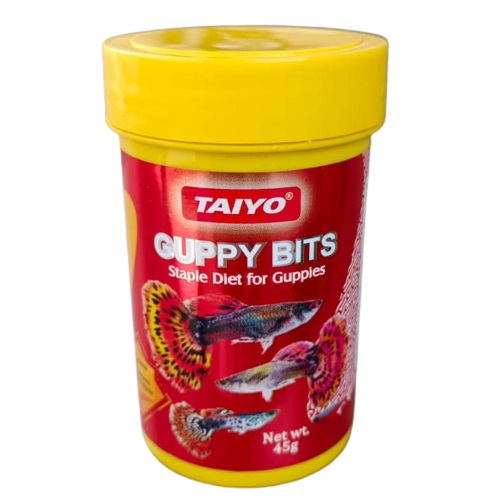
- Flakes: Easy and cheap. Choose high-protein, small flakes. Crush for fry. Watch for stale flakes, as vitamins fade over time.
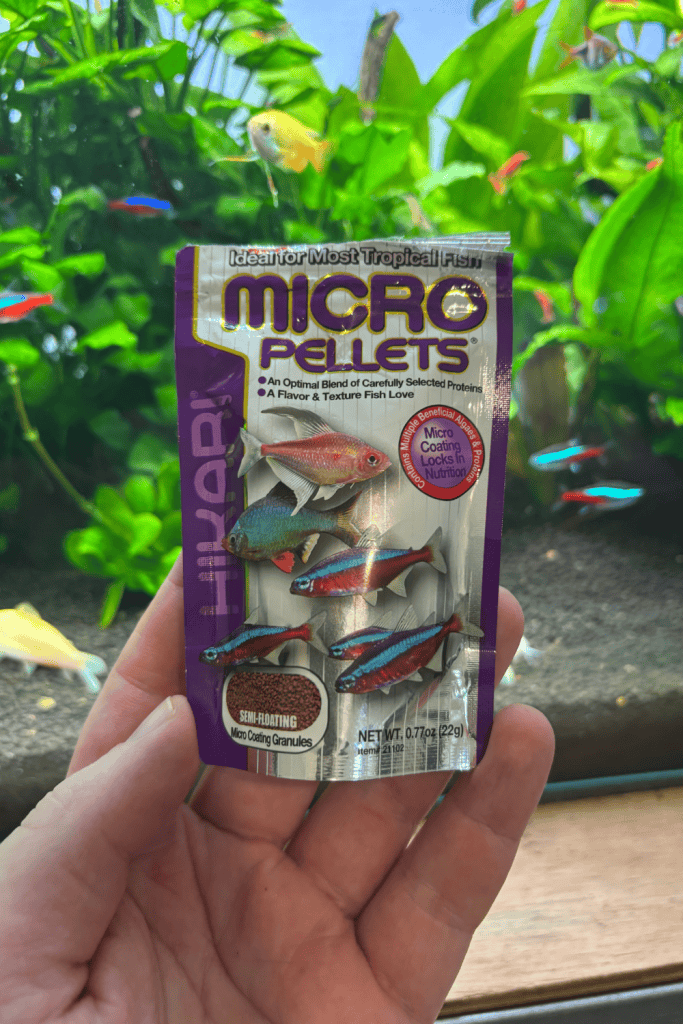
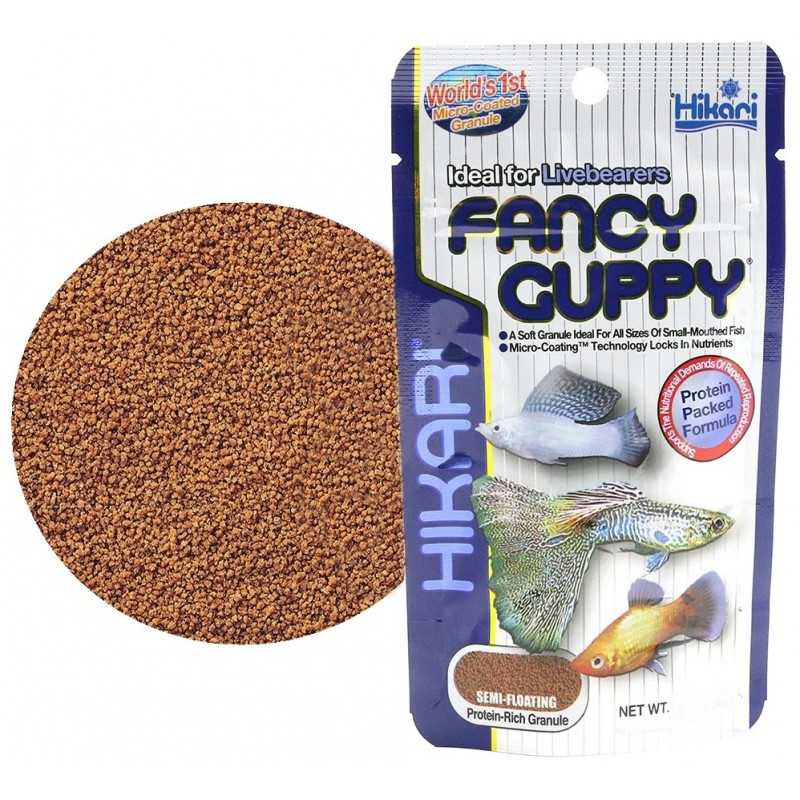
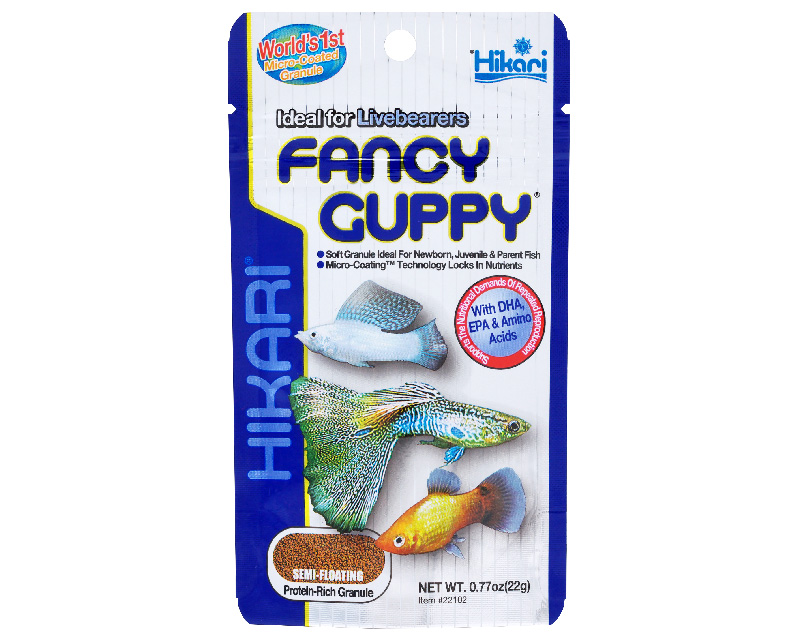
- Micro pellets: Great control over portions. Look for 0.5 to 1 mm size. Slow-sinking pellets suit mid-water feeding.
- Live foods: Baby brine shrimp, daphnia, microworms, and vinegar eels. Great for fry growth and breeding. Rinse to keep water clean.
- Frozen foods: Brine shrimp, daphnia, cyclops, and bloodworms. Safe, easy, and rich. Thaw and rinse before use.
- Freeze-dried foods: Bloodworms, tubifex, and daphnia. Good as a treat. Soak first to avoid air gulping and bloat.
- Veg options: Blanched spinach, zucchini, peas (skins off). Spirulina flakes or pellets. Small amounts keep guts healthy.
- Treats: Use high-fat foods sparingly. Keep variety, not excess.
Avoid large pellets, stale foods, and any with vague filler as the first ingredient. Steer clear of wild-collected live foods that may carry pests.
Feeding Schedules And Portions By Life Stage
Good timing keeps guppies lean and lively. Tiny meals beat big meals.
- Fry, weeks 1 to 4: 4 to 6 micro meals daily. Baby brine shrimp, powdered flakes, and infusoria. Keep water clean with small daily changes.
- Juveniles, weeks 5 to 12: 3 to 4 meals. Use micro pellets, brine shrimp, cyclops, and spirulina flakes. Watch growth and shape.
- Adults: 2 meals on most days. One light feeding day per week helps digestion.
- Breeding females: 3 small meals. Add live or frozen food for energy and fry health.
Portion rule: Offer what they eat in 30 to 60 seconds. If food hits the bottom and sits, feed less. I use a small spoon and pre-portion cups. It keeps me from overfeeding.
How To Read Labels For Fish Food For Guppies
Smart buying starts with the label. This is where many owners slip. Make fish food for guppies work for you, not against you.
- Ingredient order: Whole fish meal, krill, or shrimp should be first. Avoid vague meals listed first.
- Protein and fat: See the targets above. Match to life stage.
- Carotenoids: Look for astaxanthin, marigold, or spirulina for color.
- Add-ons: Probiotics and stable vitamin C support stress and gut health.
- Ash: Very high ash can mean more bone meal and less usable nutrition.
- Dates and storage: Buy small containers. Use within 2 to 3 months of opening. Keep in a cool, dry place.
Evidence from aquaculture and vet texts shows better growth and color when you use clean protein and proven pigments. Labels tell that story if you know where to look.

Safe Homemade And Fresh Options
You can add fresh food for a boost. Keep it clean and small.
- Blanched veggies: Spinach, kale, or zucchini. Offer tiny bits once or twice a week.
- Egg yolk: A tiny smear for fry. It clouds water fast, so use with care.
- DIY gel food: Blend fish fillet, shrimp, spinach, spirulina, and a binder. Freeze in thin sheets. Break off tiny pieces.
- Cultures: Baby brine shrimp is a top fry food. Microworms and vinegar eels are easy backup foods.
Rinse live or frozen foods. Quarantine cultures if you can. This avoids pests. I once rushed a live daphnia culture from outdoors and got planaria. A week in a spare jar would have saved the headache.

Common Feeding Mistakes And How To Fix Them
Most guppy issues start with the scoop, not the filter. Here is what to watch.
- Overfeeding: Causes cloudy water, fin issues, and algae. Fix by halving portions and adding a fasting day.
- One-food diets: Lead to dull color and weak fry. Rotate pellets, live foods, and greens.
- Wrong size food: Big pellets stress jaws and guts. Use micro sizes and crush flakes for small mouths.
- Stale food: Vitamins fade fast. Buy small jars. Note the open date.
- Poor timing: Feeding late at night leaves waste. Feed when lights are on and fish are active.
Water tests help confirm overfeeding. Ammonia or nitrite means waste is winning. Feed less and clean more for a week, then reassess.
A Simple 7-Day Menu For Easy Variety
This plan keeps balance, color, and clean water. Adjust portions to what your fish finish fast. It uses fish food for guppies you can find in most stores.
- Day 1: Morning micro pellets; evening baby brine shrimp.
- Day 2: Morning spirulina flakes; evening frozen daphnia.
- Day 3: Morning quality flakes; evening thawed cyclops.
- Day 4: Morning micro pellets; evening blanched spinach bit.
- Day 5: Morning crushed flakes; evening baby brine shrimp.
- Day 6: Morning micro pellets; evening small freeze-dried bloodworms (pre-soaked).
- Day 7: Fasting or one very light feeding.
I run this menu for three weeks, then swap one slot for a gel food. This keeps them eager and avoids picky eaters.

Health And Color: What A Good Diet Looks Like
Diet shows in the fins and belly. Learn the signs and act fast.
- Signs of a good diet: Flat bellies after meals, bright eyes, firm fins, and steady activity. Colors deepen over two to four weeks.
- Signs of poor diet: Stringy poop, gasping, dull color, clamped fins, or slow growth. Check food and water at once.
- Quick fixes: Add daphnia to help with mild constipation. Add spirulina for gut health. Use garlic extract once a week to spark appetite.
If a fish isolates, check nitrite and temperature first. Then adjust food. Diet and water are a team.
Frequently Asked Questions Of Fish Food For Guppies
How often should I feed guppies?
Feed adults twice a day in small portions. Fry need 4 to 6 tiny meals to grow well.
Are flakes or pellets better for guppies?
Both can work if quality is high and size is small. Many keepers mix them to balance texture and nutrients.
What is the best protein level in fish food for guppies?
Adults do best with 35 to 45 percent protein. Fry and juveniles thrive at 45 to 55 percent.
Can guppies eat human food?
A little blanched spinach or zucchini is fine. Avoid salty, oily, or seasoned foods.
Do guppies need live food?
They do not need it, but they benefit from it. Live or frozen foods boost growth, color, and breeding results.
How do I stop overfeeding?
Offer what they eat in under a minute. If food sinks and sits, feed less next time.
What foods boost color in guppies?
Look for carotenoids like astaxanthin and spirulina. Rotate live or frozen foods for natural pigments.
Conclusion
Great guppy care is simple: small meals, clean water, and real variety. Choose fish food for guppies with strong protein, some greens, and proven pigments. Keep portions tiny and your schedule steady.
Try the 7-day menu this week and note the changes. Share your results, ask a question, or subscribe for new care guides and feeding tips.